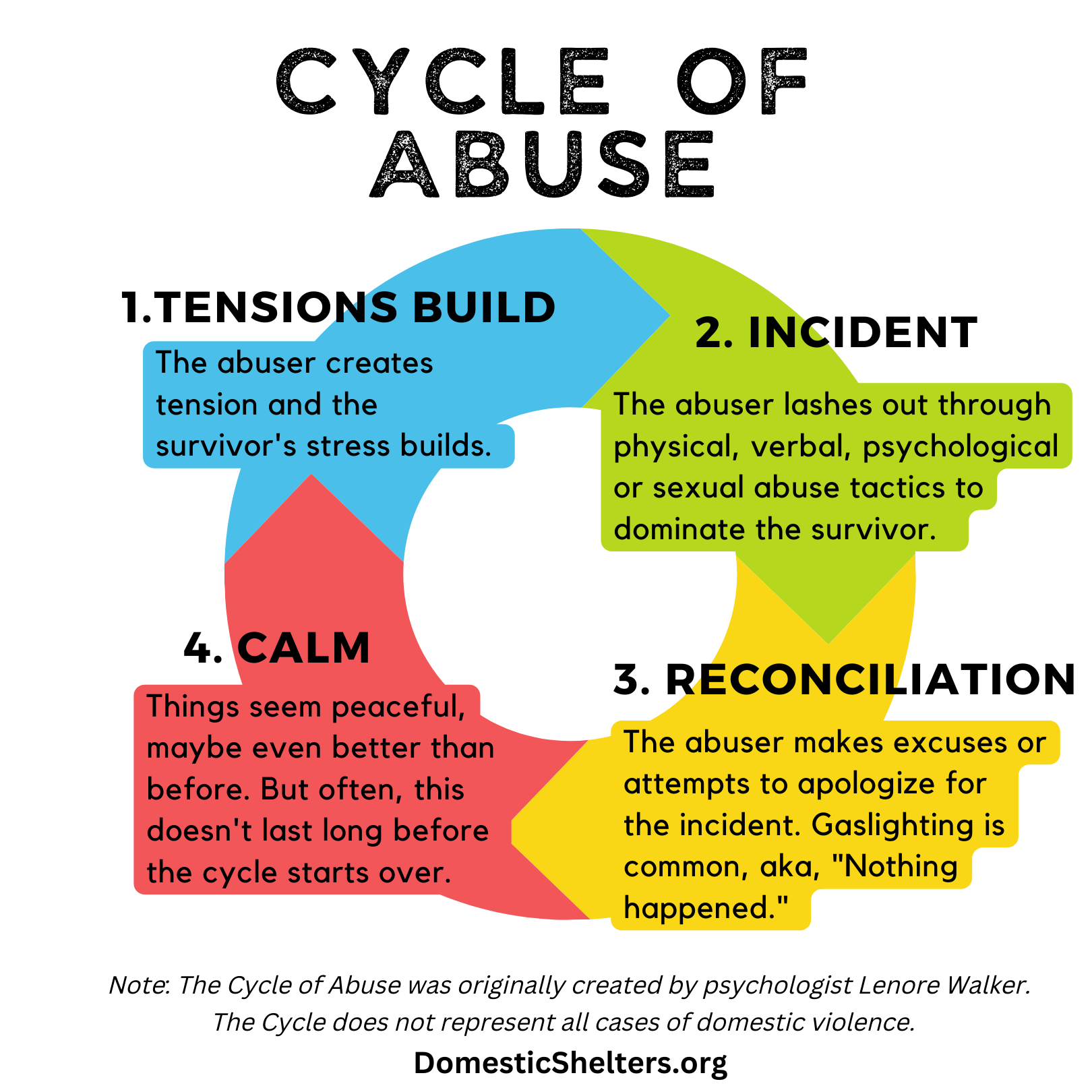
The Cycle of Abuse
-
The cycle often begins with a period of growing tension. During this stage, the victim may feel increasingly anxious, fearful, or like they are “walking on eggshells.” Everyday stressors such as work, family disagreements, financial struggles, illness, or other major life events may contribute to the tension.
However, stress is never an excuse for abuse. Most people experience difficult situations without becoming abusive toward others. An abuser may use these circumstances to justify or blame their behavior, but the responsibility for the abuse belongs to the person choosing to use it.
During this stage, a victim may try to prevent the situation from escalating by becoming quieter, more agreeable, submissive, or overly helpful. Others may react differently and intentionally push the situation toward the violence they expect is coming. This can be a survival response—a way to feel some control over when or how the abuse happens, reduce the uncertainty, or simply get through what they believe is inevitable.
-
The next stage is the incident phase, when the tension escalates into an actual act of abuse. This can take many forms, including physical, verbal, emotional, or psychological abuse. It may involve hitting, slapping, strangling, yelling, threatening, name-calling, intimidation, or making the victim feel worthless or afraid.
Although every stage of the cycle can be used to maintain power and control, the incident itself can be especially frightening and dangerous. The abuser may use this moment to intimidate, hurt, or overpower the victim in an attempt to maintain control over the relationship.
-
The third stage is the reconciliation phase, which may also be referred to as the “honeymoon” or “excuse” phase. After an abusive incident, the abuser may apologize, promise that it won’t happen again, or try to explain away their behavior. They may blame outside circumstances, such as stress at work, or shift the responsibility onto the victim by saying things like, “You made me angry” or “If you hadn’t done that, this wouldn’t have happened.”
This stage can create confusion and give the victim hope that things will change. Gaslighting may also occur, with the abuser denying the incident, minimizing what happened, or convincing the victim that the abuse wasn’t as serious as they remember.
While this period may feel calmer, it does not mean the cycle has ended. Without change and accountability, the tension can begin building again.
-
The final stage of the cycle is the calm phase. After the incident and reconciliation, things may appear to return to normal. The relationship might even feel happier or more peaceful for a period of time. Survivors sometimes describe this as the “honeymoon phase.”
During this stage, an abuser may shower the victim with affection, attention, gifts, or promises in an attempt to make up for what happened. This can sometimes be love-bombing, which may create hope that the relationship will change and that the abuse will not happen again.
But the calm does not last forever. Over time, the tension begins to build again, apologies may become less meaningful, and promises to change may disappear. The cycle eventually repeats, leading to another incident of abuse.
Over time, the cycle of abuse can become more frequent and more severe. The periods of reconciliation and calm may become shorter or disappear altogether, leaving little time between the tension and the next abusive incident.
For many survivors, leaving is not as simple as “just walking away.” Fear, shame, financial dependence, isolation, threats, emotional attachment, and the hope that things will get better can all make leaving incredibly difficult. Some survivors may even blame themselves or believe they somehow caused the abuse. They did not. The responsibility for abuse always belongs to the person choosing to use it.
The cycle can also create what is known as trauma bonding—a strong emotional attachment that can develop through repeated patterns of abuse, fear, affection, apologies, and moments of calm. A survivor may hold onto the hope that the loving version of their partner will return or that they can somehow change the relationship.
For children who witness abuse, these patterns can also affect how they understand relationships. Without support and education, they may begin to believe that controlling or abusive behavior is normal. Teaching children and teens what healthy relationships look like can help break that cycle and give them the tools to recognize unhealthy behavior.
Source: DomesticShelters.org — What Is the Cycle of Abuse? by Hannah Craig and Amanda Kippert, updated September 21, 2022.